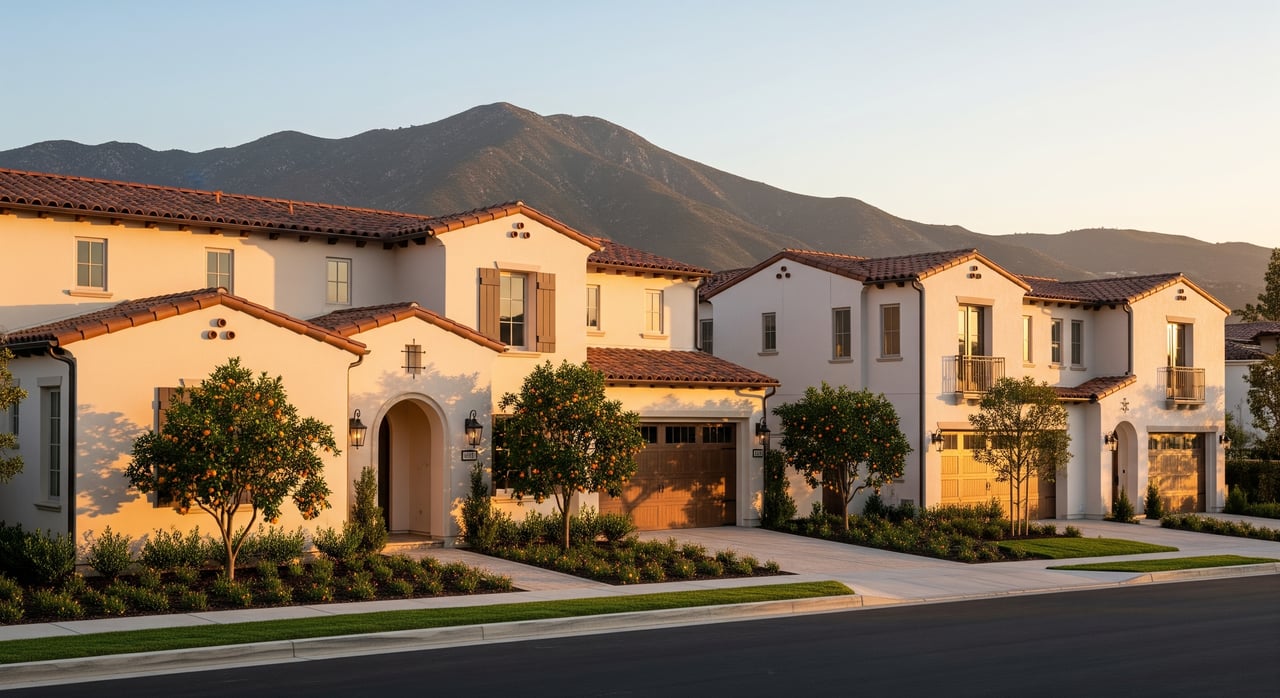
Not sure whether a condo, townhome, or single-family house is the right move in Rancho Santa Margarita? You are not alone. Each option trades off cost, control, maintenance, and lifestyle in different ways, and the details matter in South Orange County. In this guide, you will learn how these choices differ in RSM, what they typically cost, how HOA rules and insurance work, and a simple checklist to compare homes side by side. Let’s dive in.
How RSM living works
Rancho Santa Margarita is a master-planned city in southeast Orange County with a mix of attached and detached homes. Many neighborhoods are organized as villages within larger master associations, which shape maintenance standards, amenities, and rules. The community is largely residential and commuter friendly with access to job centers in Irvine, Anaheim, and Santa Ana.
Public schools in the area are served primarily by Saddleback Valley Unified School District. Always verify a specific home’s school assignment by address, since boundaries can vary.
Ownership types in California explained
Condos in RSM
In a typical California condominium, you own the interior of your unit plus a shared interest in the common elements, such as landscaping, walkways, and exterior walls. The HOA or master association usually maintains exterior building elements and common areas.
Insurance for condos is different from houses. You usually carry an HO-6 policy that covers interior finishes, personal property, and liability. The HOA carries a master policy for common areas and often some exterior coverage. Review the HOA insurance declaration to see whether it is “walls-in” or “walls-out,” since this determines what you must insure.
What it means for you: fewer direct maintenance tasks and more predictable exterior care, but you will pay monthly HOA dues and should plan for special assessments when big projects are due.
Townhomes in RSM
Townhomes in California can be structured as condominiums or as fee-simple lots. That means the exact maintenance split varies by community. Some HOAs cover the roof and exterior. Others make the owner responsible for the exterior and yard while the HOA maintains common areas. Read the CC&Rs and recorded condominium map to know where your responsibility begins and ends.
Insurance needs follow the structure. If the HOA covers exteriors, you may have HO-6 style coverage. If you own the structure, you may need broader HO-3 style coverage similar to a single-family home.
What it means for you: a middle ground on cost and control. You often get more private space and a garage with lower yard work than a house, but you must understand the HOA’s rules and reserves before you buy.
Single-family homes in RSM
In a detached single-family home, you own the land and the structure. You are responsible for exterior maintenance, landscaping, utilities, and structural repairs. If your home is inside a master-planned or gated community, the HOA typically maintains shared amenities like gates, parks, or clubhouses. You carry full dwelling insurance, often an HO-3 policy, and you decide on optional coverage like earthquake insurance.
What it means for you: the most privacy and control, room for outdoor living, and potential to expand. You also take on the highest maintenance load and capital repair risk.
What you will pay each month
To compare total cost, add up your mortgage payment, property taxes and assessments, homeowner’s insurance, HOA dues, utilities, and an allowance for maintenance.
Purchase price patterns
In Rancho Santa Margarita, entry-level ownership often starts with condos. Townhomes typically sit between condos and single-family homes. Detached homes usually command the highest prices because you are paying for the lot and a stand-alone structure. Actual prices vary with unit size, age, location, views, and amenity packages.
HOA dues and what they include
HOA dues vary widely across Orange County and within RSM. As a general reference as of 2023–2024, many condos run about $300 to $700 or more per month. Many townhomes range from about $200 to $600 or more. Single-family homes inside master-planned or gated communities might see HOA dues around $50 to $400 per month. Exact fees depend on included services such as exterior maintenance, insurance contributions, landscape, water or trash, and the level of reserve funding.
A low monthly fee does not always mean a low overall cost. Poor reserves can lead to special assessments when roofs, paving, or exterior paint come due. Review the most recent budget and reserve study to judge long-term sustainability.
Property taxes, Prop 13, and Mello-Roos
California’s Proposition 13 limits increases to your base property tax assessment. In practice, total effective property tax bills in Orange County commonly fall around 1.1 to 1.3 percent of assessed value, but individual parcels can be higher if there are Mello-Roos or special district bonds. Always confirm the presence and amount of Mello-Roos and other assessments on each listing and in the preliminary title report.
Insurance and hazards to consider
Standard homeowners policies do not cover earthquake damage. If you want earthquake coverage, you purchase it separately. Flood exposure and other hazards vary by parcel, so review the seller’s disclosures and consider getting quotes before you remove contingencies. For condos, verify what the HOA’s master policy covers. For townhomes, confirm whether your structure is included or whether you need full dwelling coverage.
Maintenance budgeting
With single-family homes, a common guidance is to set aside about 1 to 3 percent of the home’s value per year for maintenance and repairs. Attached homes shift some of that cost into HOA dues. Do not rely on rules of thumb alone. Review the HOA’s reserve study to see what big projects are scheduled and how they will be funded.
Lifestyle tradeoffs to consider
Space, privacy, and noise
Condos tend to offer the least private living because of shared walls and floors. Townhomes usually have better separation and attached garages. Single-family homes offer the most separation, a private yard, and fewer shared-wall noise concerns.
Outdoor space and gardening
Condos usually offer a balcony or patio, with shared landscaping handled by the HOA. Townhomes often provide a small private yard or patio that may be your responsibility. Single-family homes give you full yard control and options for a pool or play area along with higher upkeep.
Parking and storage
Condos commonly have assigned parking with guest parking rules that are set by the HOA. Storage can be limited. Townhomes typically include a private garage and sometimes a driveway. Single-family homes offer a garage, driveway, and possibly room for recreational vehicles, subject to local and HOA restrictions.
Pets, rentals, and short-term stays
Many HOAs set pet and rental rules. Expect caps on rental units, minimum lease terms, pet size or quantity limits, and application processes. Review CC&Rs and current policies if you plan to rent out your home or have specific pet needs.
Time and maintenance tolerance
If you prefer low maintenance, condos or HOA-managed townhomes can be a good fit. If you enjoy DIY projects or want full control over exterior changes, a single-family home provides the most flexibility. Most HOAs require architectural applications for exterior modifications, so plan ahead.
Where each option tends to be in RSM
Attached homes such as condos and townhomes often cluster near shopping centers, service corridors, and community facilities. Many of these were built from the 1980s through the 2000s and offer convenience for errands and commuting. Detached homes are distributed across the city’s villages, often on cul-de-sacs and near parks, with larger lots toward the hills and the perimeter of the community. Gated enclaves sometimes carry higher HOA fees that reflect shared amenities.
Proximity to major roads and job centers can influence your choice. Attached communities near retail may offer shorter walks to essentials. Detached homes may require a short drive for errands but deliver more space and privacy.
Which option fits your goals
Use this quick mapping to stress-test your fit:
- First-time buyers, downsizers, and budget-focused buyers: consider a condo or smaller townhome for lower entry price and easier maintenance.
- Move-up buyers who want more indoor space, a private garage, and limited yard work: look at townhomes or multi-level attached homes.
- Households that prioritize privacy, outdoor space, and long-term flexibility: consider a single-family home with a private yard.
Remember that townhome responsibilities vary by community. The CC&Rs and the recorded map will confirm who handles the roof and exterior.
Smart due diligence checklist
For condos and townhomes
- CC&Rs, bylaws, and rules and regulations.
- Most recent HOA financial statements, current budget, and latest reserve study.
- Board meeting minutes from the last 12 to 24 months to spot recurring issues or projects.
- Disclosure of any pending or recent litigation involving the HOA.
- Master insurance policy declaration that clarifies walls-in vs walls-out coverage.
- Rental rules and any short-term rental policy.
- Parking assignments, guest parking rules, and any storage details.
- Recent or upcoming exterior projects with timelines for roofs, paint, and paving.
For single-family homes
- Parcel tax and special assessment details, including Mello-Roos, plus the most recent tax bill.
- General home inspection, roof and pest inspections, and permit history for alterations or additions.
- Utility responsibility, easements, and encroachments.
- If subject to an HOA, request the same HOA documents listed above.
For all buyers
- Recent comparable sales and days on market in the micro-neighborhood.
- Insurance quotes for hazard and earthquake coverage to estimate total cost.
- School assignment confirmation by address and proximity to parks or transportation.
- Local restrictions for vehicle or boat parking and any design standards for exterior changes.
- HOA transfer fees, potential capital contributions, and any seller-paid fees typically expected.
How to compare total monthly cost
To compare a condo vs a townhome vs a single-family home, build a simple monthly total for each target property:
- Mortgage payment based on your loan details.
- Property tax estimate using the purchase price and add local assessments. Many Orange County parcels fall around 1.1 to 1.3 percent of assessed value, but confirm each home’s actual bill and whether Mello-Roos applies.
- Homeowner’s insurance based on structure type. Add a separate earthquake quote if you plan to carry it.
- HOA dues and any utilities included in the dues.
- Average utilities you will pay directly.
- Maintenance allowance. For single-family homes, consider 1 to 3 percent of value per year. For attached homes, use the HOA’s reserve study to understand upcoming projects and potential special assessments.
This side-by-side view makes the tradeoffs clear. A condo’s lower price might come with higher HOA dues. A single-family home’s higher price can bring more control and privacy along with higher maintenance risk. Choose the balance that best supports your budget and lifestyle.
Next steps
If you are torn between a condo, a townhome, or a house in Rancho Santa Margarita, you do not have to decide alone. I will help you verify HOA responsibilities, evaluate reserve studies, check Mello-Roos and assessments, and model your true monthly cost so you can move forward with confidence. When you are ready to tour or want a quick cost comparison on a property, reach out to Shannon Parks. Let’s connect and make a smart plan.
FAQs
Who handles exterior repairs in condos, townhomes, and houses?
- It depends on the legal structure and CC&Rs. Condos usually have HOA responsibility for exteriors, townhome responsibilities vary by community, and single-family owners handle their own exteriors.
Do condos appreciate slower than single-family homes in RSM?
- Often yes over long cycles because land value drives much appreciation, but strong demand for affordable ownership can make condos competitive in certain markets.
How big are HOA dues in Rancho Santa Margarita?
- Dues vary by community and included services. As a general 2023–2024 reference, many condos run about $300 to $700 or more per month and many townhomes about $200 to $600 or more. Verify each listing.
What should I know about property taxes and Mello-Roos in Orange County?
- Total effective property tax rates often fall around 1.1 to 1.3 percent of assessed value, and some parcels carry Mello-Roos or special district bonds. Confirm each property’s bill and assessments.
Do I need earthquake insurance in South Orange County?
- Standard homeowners policies do not cover earthquake damage. Consider separate earthquake coverage and get quotes during your inspection period.
How do I check whether the HOA covers the roof on a townhome?
- Read the CC&Rs and the recorded condominium map, then confirm with the HOA or title company to see where owner responsibility begins.
Are rentals allowed in RSM condo and townhome communities?
- Many HOAs set rental caps and minimum lease terms. Review the community’s current rental policy and confirm whether the cap has been reached.
How do I compare total monthly cost across property types?
- Add mortgage, property tax and assessments, insurance, HOA dues, utilities, and a maintenance allowance. Use HOA reserve studies to estimate special assessment risk.